Detecting Tampering & Fraud in Bank and Mobile Money Statements
Unmasking Financial Fraud in Digital Lending

Fraud in financial documents—especially bank and mobile money statements—has become a growing concern for Microfinance lenders and other financial institutions. Fraudulent modifications, whether by individuals inflating their income or organized fraud rings fabricating transaction histories, pose significant risks in credit assessment and Know Your Customer (KYC)/Know Your Business (KYB) workflows.
At Cladfy, we continuously enhance our fraud detection capabilities to help lenders and businesses verify financial statements with confidence. Our latest feature detects signs of tampering and fraud in bank and mobile money statements, providing transparency in the credit evaluation process.
How We Detect Fraudulent Activity
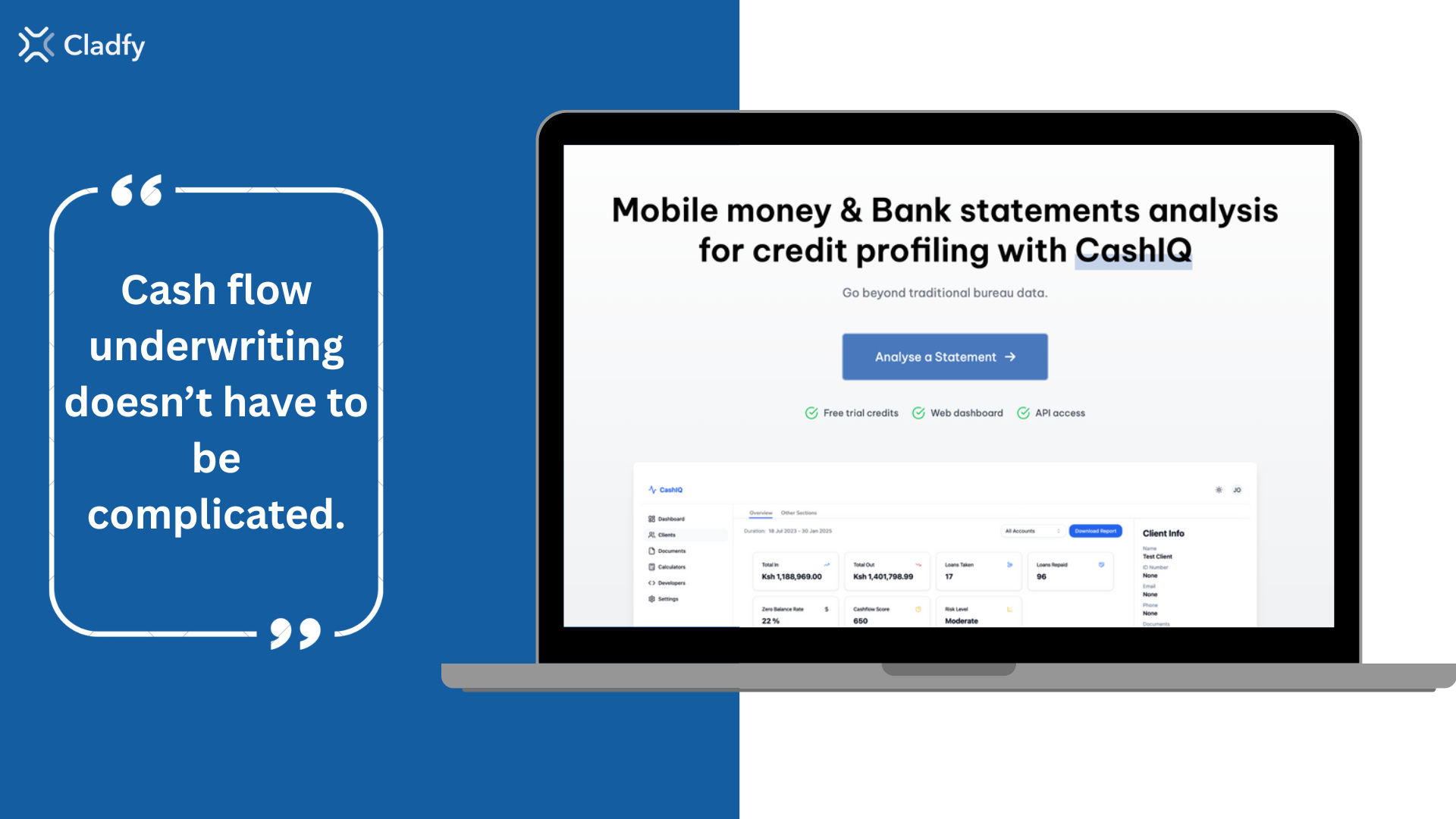
Cladfy’s CashIQ uses advanced AI-driven analytics to assess financial statements submitted during credit assessments and KYC/KYB workflows. Our system scans each statement for inconsistencies and manipulation, flagging any suspicious activity. While our fraud detection system assigns an Authenticity Score, we strongly recommend reviewing all statements, regardless of their score, to ensure accurate and informed decision-making.
Authenticity Score: (XX/100)
Based on multiple fraud signals, our system categorizes statements as highly suspicious, moderately suspicious, or fairly suspicious. We generate detailed reason codes to provide transparency on why a statement may not be authentic.
Detected Tampering Signals:
PDF Editing Software Detected: Our system identifies whether a statement was altered using software commonly used for modifying PDFs, raising concerns about its legitimacy.
Account Holder Name Modification: Any changes to the original account holder’s name indicate a potential case of identity fraud.
Account Number Modified: We detect modifications in the account number, signaling an attempt to misrepresent financial details.
Suspicious Statement Origin: Our analysis of metadata and statement structure helps us identify documents that may have originated from unauthorized or non-bank sources.
Transaction Section Tampered: If transaction histories appear inconsistent or manipulated, our system flags them as a strong indicator of fraudulent activity.
Why This Matters for Lenders and Businesses
Fraudulent financial statements can lead to poor lending decisions, increased defaults, and financial losses. Detecting tampering early helps:
Reduce the risk of lending to unqualified borrowers.
Prevent identity fraud and financial misrepresentation.
Strengthen regulatory compliance in KYC/KYB processes.
Improve operational efficiency by reducing manual fraud investigations.
What’s Next?
Cladfy remains committed to helping financial institutions combat fraud through AI-driven insights and automated fraud detection. Our tampering and authenticity checks provide lenders with an added layer of security, ensuring that every statement is thoroughly analyzed before making critical financial decisions.
We go beyond just detection. Our platform integrates these fraud signals into your lending workflows, enabling seamless fraud assessment and risk mitigation. By leveraging machine learning and pattern recognition, we provide lenders with a deeper understanding of statement integrity, reducing fraud-related risks while ensuring legitimate borrowers receive timely financial services.
Interested in learning how our fraud detection technology can enhance your credit assessment workflows? Contact us today or visit Cladfy to schedule a demo.